For businesses looking to protect their vehicles, equipment, and outdoor assets from hail damage, hail netting systems provide a cost-effective, durable, and low-maintenance solution. But one of the most common questions business owners ask is:
How Difficult is it to Install Hail Netting?
Hail netting systems are designed for easy installation and require minimal upkeep, making them a hassle-free way to safeguard your inventory. In this guide, we’ll walk through the installation process, key benefits, and how these systems offer long-term hail protection with minimal maintenance.
How to Install Hail Netting: A Step-by-Step Overview
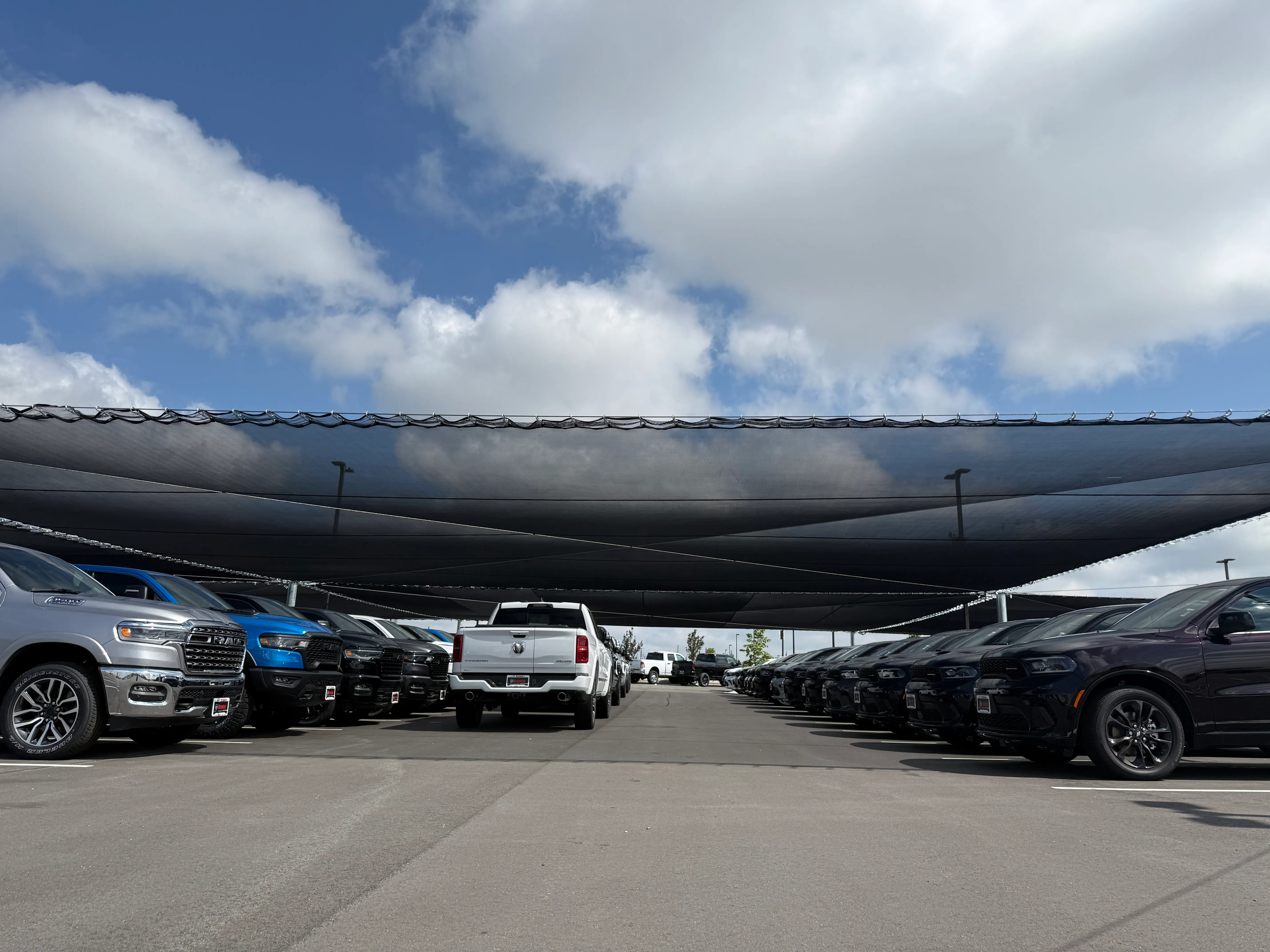
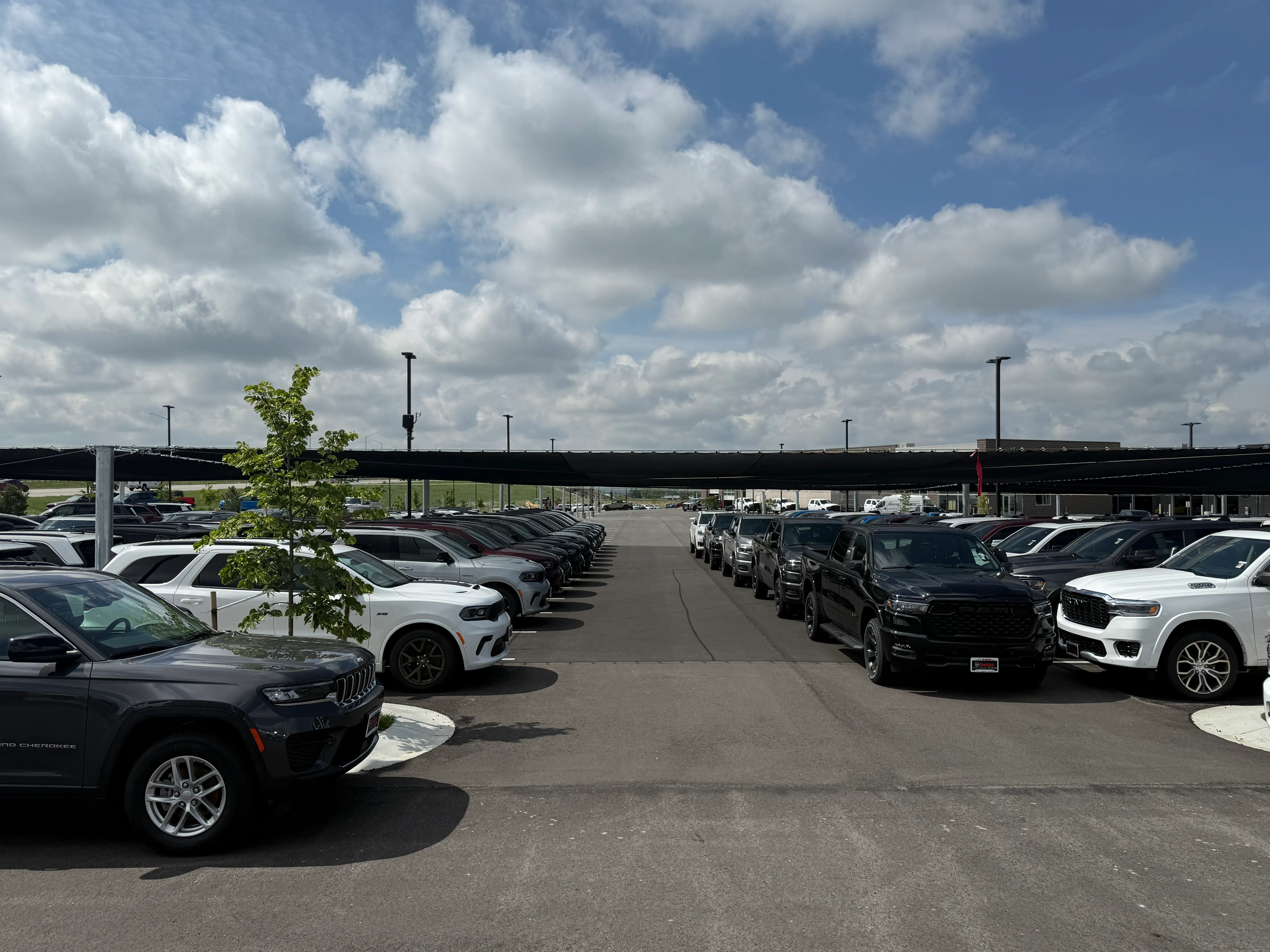
Hail netting systems are engineered for efficiency, meaning installation can be completed quickly with minimal disruption to daily business operations.
Step 1: Site Assessment & Custom Design
- Professional evaluation of the area to determine the best structure layout.
- Customized netting solution based on lot size, industry needs, and coverage requirements.
Step 2: Installing Support Structures
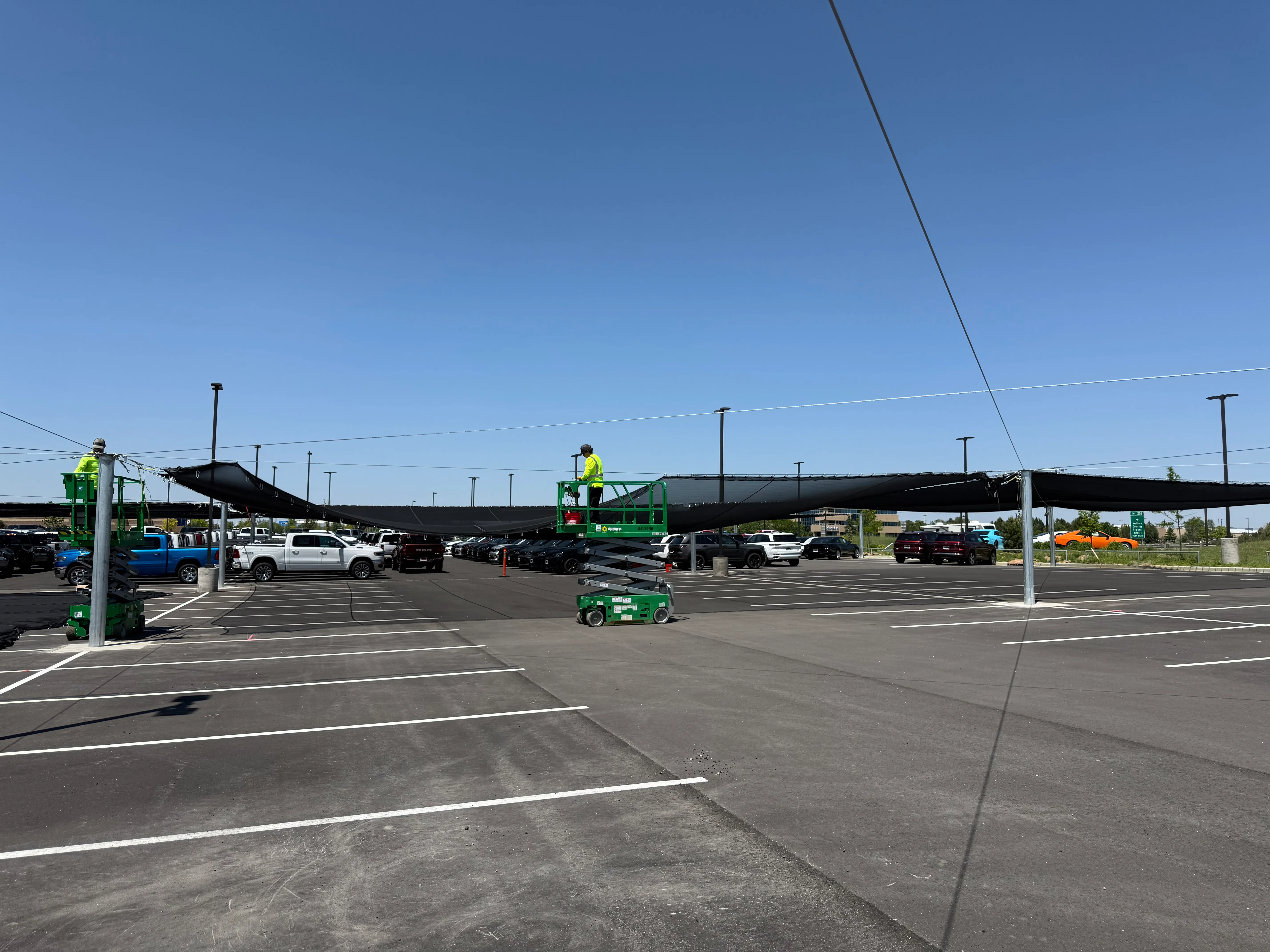
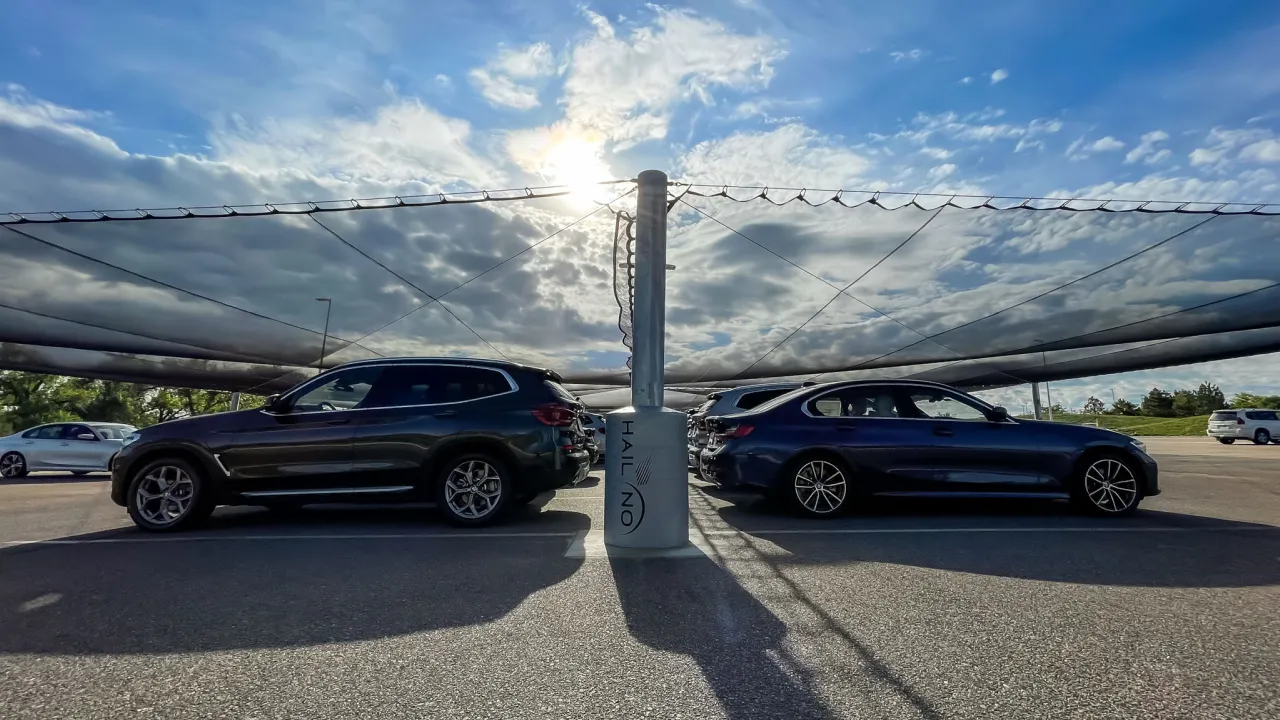
- Galvanized steel columns are anchored into the ground.
- Spacing is optimized to provide maximum coverage while maintaining strength.
Step 3: Attaching the Hail Netting
- Knotless, weather-resistant netting is stretched over the frame.
- The netting is tensioned to allow impact absorption without sagging.
- Netting is attached to stainless steel cabling via galvanized and stainless steel turnbuckles and connectors.
Step 4: Final Adjustments & Quality Check
- Secure fastening & reinforcement to withstand high winds and heavy storms.
- Inspection & testing to ensure optimal performance before full deployment.
Total Installation Time: After permitting approvals, most hail netting systems can be installed in just a few days to a few weeks—significantly faster than permanent structures like covered parking or warehouses.
Learn More >> What to Expect During a Hail Netting Installation Project: Step-by-Step Overview
Why Hail Netting Systems Are Low-Maintenance
Unlike other hail protection solutions that require frequent repairs or manual deployment, hail netting is low maintenance and easy to repair.
Minimal Upkeep, Maximum Protection
- UV-Stabilized Materials – Resistant to sun damage, fading, and wear over time.
- Weather-Resistant Coatings – Protects against moisture, mold, and corrosion.
- Self-Tensioning Design – Reduces sagging, eliminating the need for frequent adjustments.
- Rust Proof – Hail No only utilizes Galvanized or Stainless Steel components in their systems. The last thing you need is rusty components on your site.
Recommended Maintenance Checklist:
🛠 Annual Inspection – Check for tension, structural integrity, and minor wear.
🛠 Post-Storm Checkups – Ensure netting is secure after extreme weather.
🛠 Simple Repairs – If a section needs replacing, it can be patched or swapped out without reinstalling the entire system.
Comparing Hail Netting Installation vs. Other Hail Protection Options
💡 Why Choose Hail Netting? It strikes the perfect balance of affordability, durability, and ease of installation, making it the best all-around hail protection solution.
>> Related Article: Comparing Hail Netting to Other Hail Protection Systems
Is Hail Netting the Right Solution for Your Business?
If you need a fast, reliable, and low-maintenance hail protection system, hail netting is the ideal solution. Businesses in auto dealerships, parking lots, warehouses, and industrial plants benefit from:
✔ Quick installation with minimal disruption
✔ Long-lasting, weather-resistant materials
✔ Hassle-free maintenance & cost savings