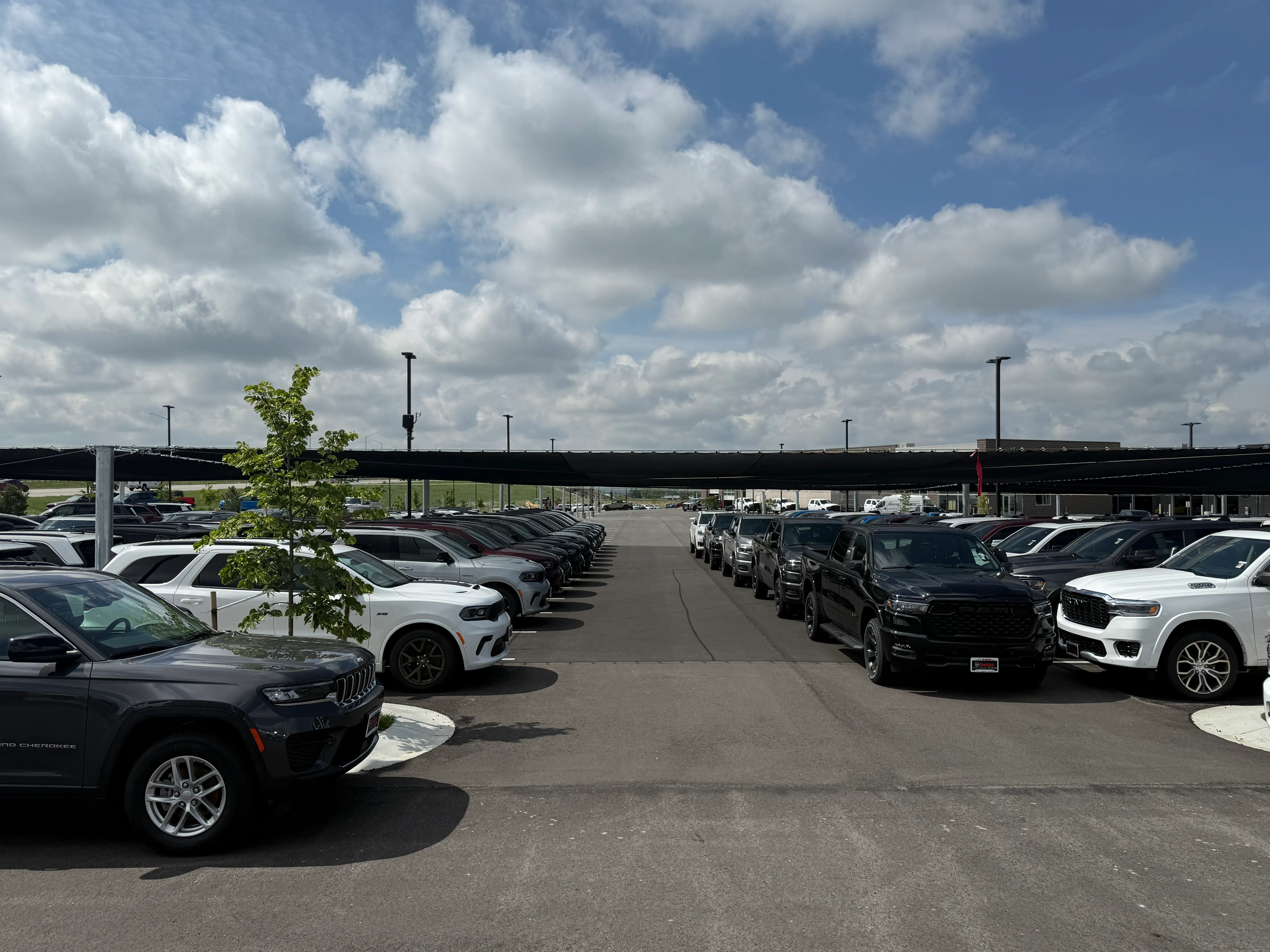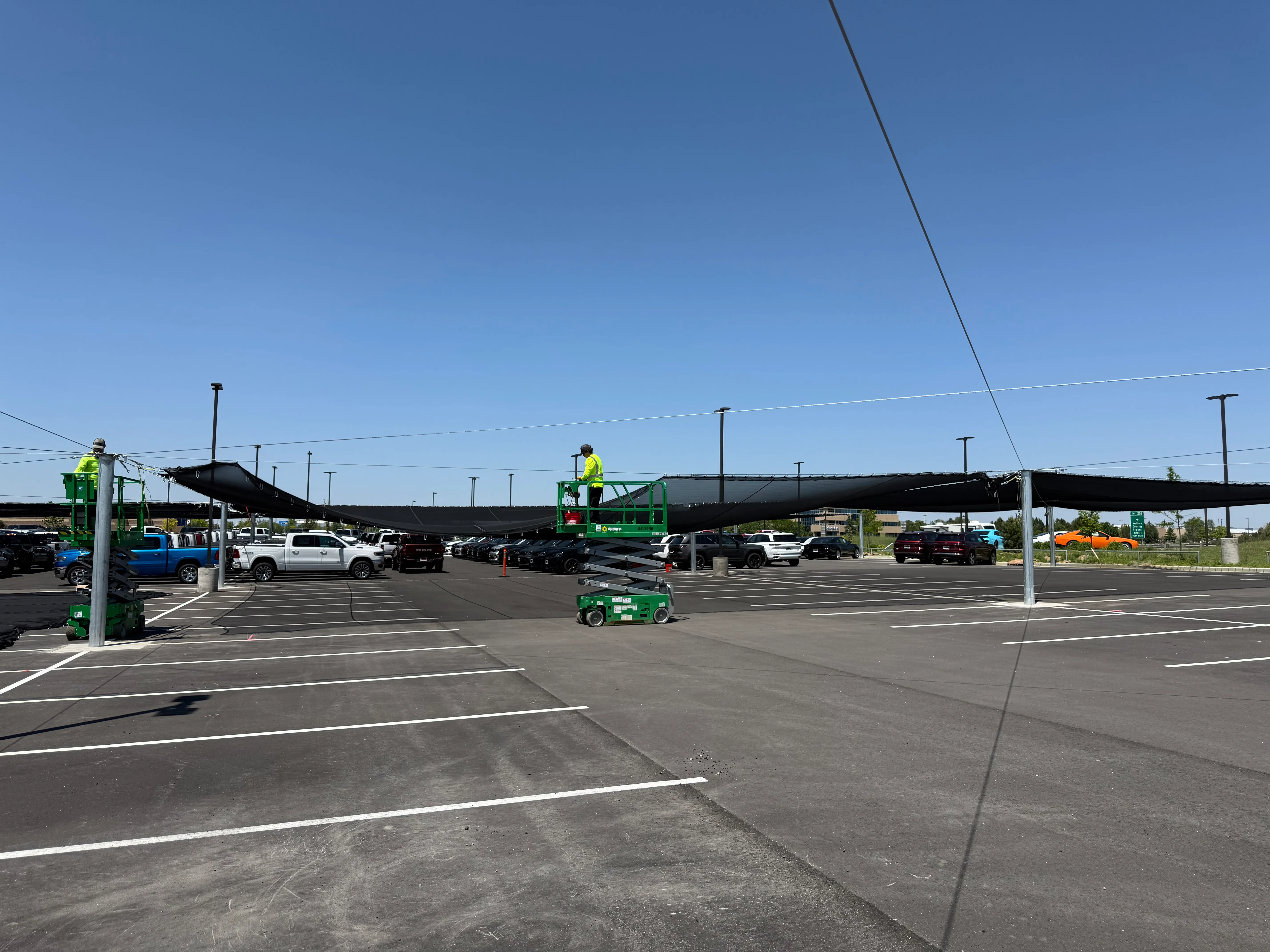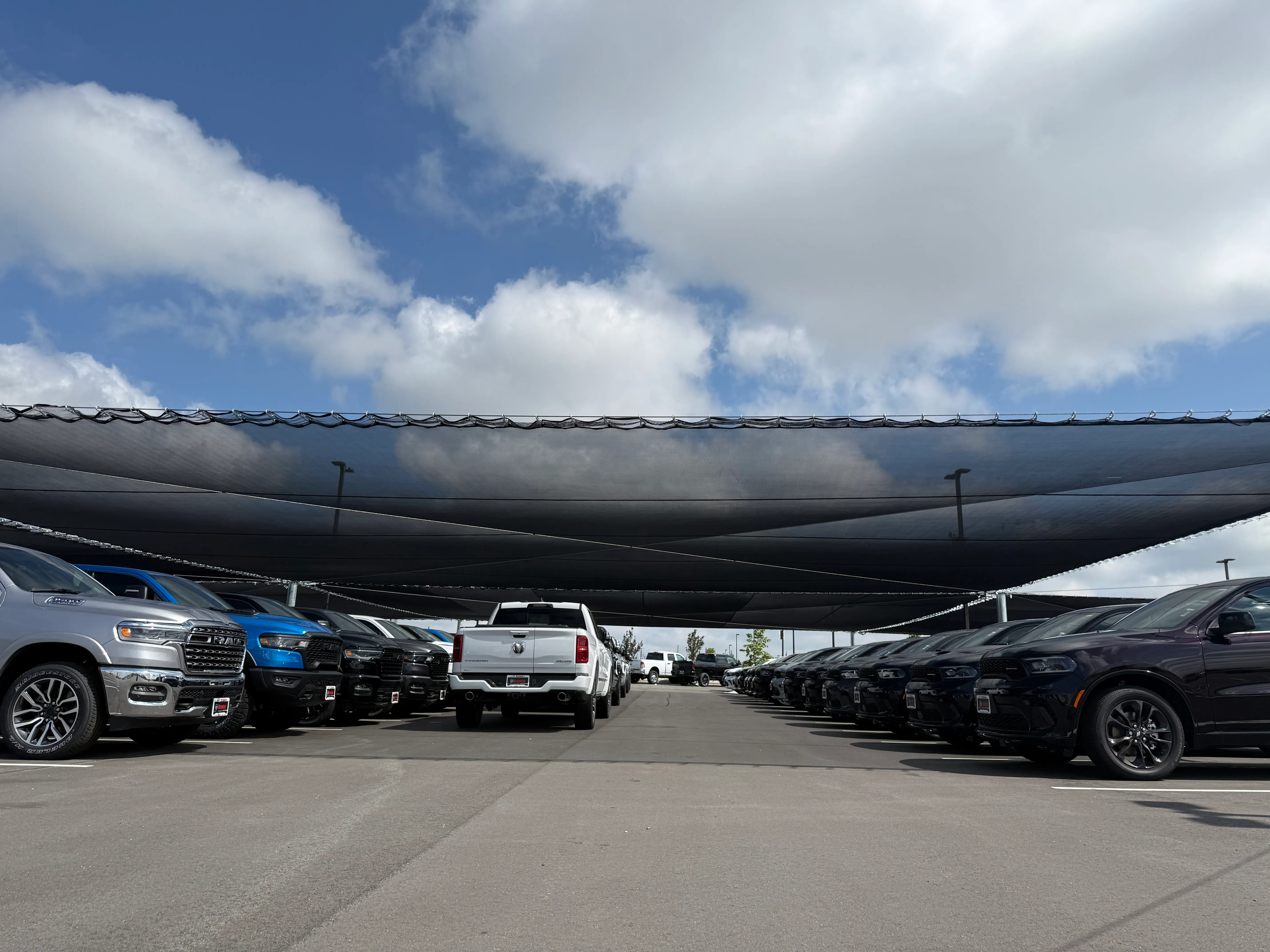
When businesses invest in hail protection, they’re not just buying a structure — they’re trusting that the hail netting above their vehicles, solar panels, aircraft, or equipment will perform when the storm hits.
To better understand what goes into crafting that protection, we spoke with Taylor Forrester, Sales Director at Custom Netting, Hail No’s fabrication partner.
Read on to learn more about how hail netting is made, what buyers should look for, and why professional design and installation matter more than most people realize.
From Bird Netting to Hail Protection
Custom Netting didn’t start in hail. The company’s roots trace back to bird netting and sports applications — including batting cages and safety netting — before expanding into commercial protection systems.
Custom Netting operates on a simple principle: customer experience and expertise.
“The whole company is built on customer experience and expertise,” Taylor says. “If we’re going to do something, we’re going to partner with the best manufacturers globally and understand the product entirely.”
That philosophy carries into hail protection. “Netting in general can be used across a wide variety of applications,” Taylor explains. “Safety netting kind of got us into the hail netting market. It’s a very similar material type, very similar fabrication methods.”
“Customer experience might not be a showroom,” he says, “but it’s how we communicate, how we service, and how we design systems that fulfill needs.”
That 25 years of fabrication experience and focus on customer experience matters. Hail netting may look simple, but its performance depends entirely on fiber selection, fabrication precision, and design.
What Hail Netting Is Made Of — And Why It Works
For hail protection systems, Hail No works with Custom Netting to employ a quarter-inch hex (honeycomb) mesh material.
“It’s effective for hail netting because it’s a very strong material, but it’s also lightweight,” Taylor says.
That balance is critical. Too heavy, and the net creates sag, increased stress on cables, and abrasion at connection points. Too light, and it won’t hold up to wind, snow load, and hail impact.
“Heavier is not always better,” Taylor notes. “You want to find the perfect blend of weight and durability to match the application. Strength is better — but strength comes with weight. So you’ve got to fine-tune the right fiber.”
The fiber itself must be:
- High UV resistant
- Abrasion resistant
- Flexible — but able to retain structural integrity
“It’s outdoors. We need these systems to last a long time,” he says. “We’ve honed in on the perfect fiber for hail netting.”
>> Related Article: How Our Hail Netting Is Engineered for Maximum Durability
The Biggest Mistake Buyers Make with Hail Protection Systems
When asked what prospective buyers should think about when considering hail protection, Taylor didn’t hesitate:
“I would say going for the cheapest product. If you cut costs early, it’s going to end up costing you in the long term.”
Hail protection systems are exposed year-round to:
- UV exposure
- Wind
- Snow load
- Moisture
- Impact events
Environmental conditions “are always going to win,” Taylor says. “It’s just a matter of time.”
The goal is not to defeat nature — it’s to maximize longevity with high-quality materials, thoughtful design, and excellent support to maintain the system over the years.
For buyers evaluating options, that means focusing on:
- UV resistance
- Structural strength without excess weight
- Durability over time
- Proper attachment and tensioning systems
- A partner who understands installation and maintenance needs
Custom Fabrication: How the Hail Netting Is Made
Every Hail No project begins with design.
“Each custom net will have its own specific drawing,” Taylor explains. “Dimensions, shape, product type, border application, attachments — all of that is reviewed before it ever hits production.”
From there:
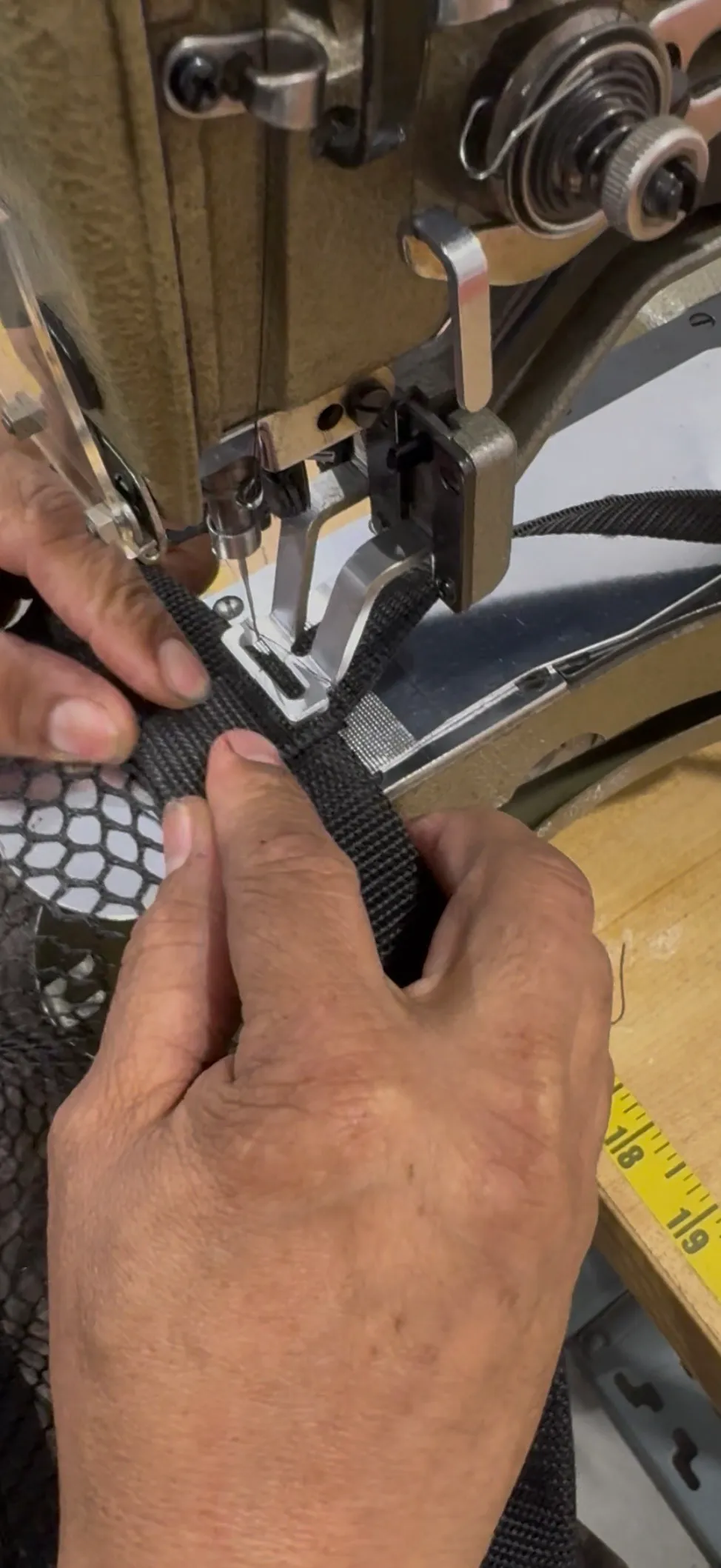
- The production team fabricates to exact specifications.
- Nets are measured and spot-checked.
- Border applications (rope or web) are sewn.
- Attachments are installed.
- A three-point quality control process verifies sizing, material type, and attachment placement.
“We have a three-point quality control standard,” Taylor says. “It’s measured when it goes into production, measured again after sewing, and then measured a third time before it’s boxed.”
That level of precision ensures that what arrives on-site fits exactly as designed — which dramatically reduces installation friction.
Designed to Look Tight — Even When Cables Bow
One area of innovation in the Hail No system is the tensioning approach.
Taylor points to the cam buckle design currently being deployed in Hail No systems:
“No matter how tight you run your cables between the steel poles, there’s always going to be some bow in them,” he explains. “That cam buckle design allows the netting to look nice, crisp, and neat across the top — even with that bow.”
For customers, that means:
- A cleaner aesthetic
- Reduced sag
- Even load distribution
- Professional finish in photos and real-world visibility
How the Hail Protection Systems Perform in Severe Weather
In real-world storms, performance matters.
Melissa Jeffrey of Hail No shared an example from Highlands Ranch, where a tornado lifted two wheels of her Bronco off the ground.
“The hail net was fine,” she said. “There was no issue with the hail net.”
In heavy spring snow events, netting may temporarily bow under load — but as snow melts, it returns to its intended position.
That flexibility is by design.
“The material fiber is flexible but retains its structure and strength,” Taylor explains.
Why Professional Design & Installation Matter for Hail Netting
Hail systems can represent a significant investment. That’s why both fabrication and installation expertise are critical.
“From what I’ve seen, Hail No is incredible at project management,” Taylor says. “Very hands-on. These systems can be expensive — but you want to make sure it’s done right.”
Upfront design is where projects are won or lost.
“In partnership with Hail No, we put a lot of focus and emphasis on the upfront design,” Taylor says. “Making sure it’s perfect for the customer and feasible for fabrication.”
That collaboration ensures:
- Clean fabrication
- Smooth installation
- Minimal surprises on-site
- Long-term durability
Melissa adds that transparency between partners is key for delivering the highest quality installation to Hail No’s clients.
“When you get that back — that transparency — it’s such a special, rare gift. I feel like we’re on the same team.”
>> Related Article: What to Expect During a Hail Netting Installation Project: Step-by-Step Overview
The Bottom Line
Hail netting isn’t just mesh overhead. It’s engineered fiber selection, weight-to-strength balance, UV science, precision fabrication, and thoughtful installation and support.
The biggest takeaway for prospective buyers?
Don’t skimp on the front end.
“You’re going to get what you pay for,” Taylor says. “Make sure it’s done right.”
When you combine Custom Netting’s experienced fabrication with Hail No’s hands-on project management and installation expertise, you get more than coverage — you get confidence and peace of mind when the next storm rolls in.