Hail netting isn’t just for agriculture anymore. Modern engineered systems now protect dealership lots, fleet services, parking facilities, and industrial yards—often paying for themselves in under two years via insurance savings and damage prevention. Read on for the definitive guide to commercial hail netting in 2026.
What Is Commercial Hail Netting and How Does It Work?
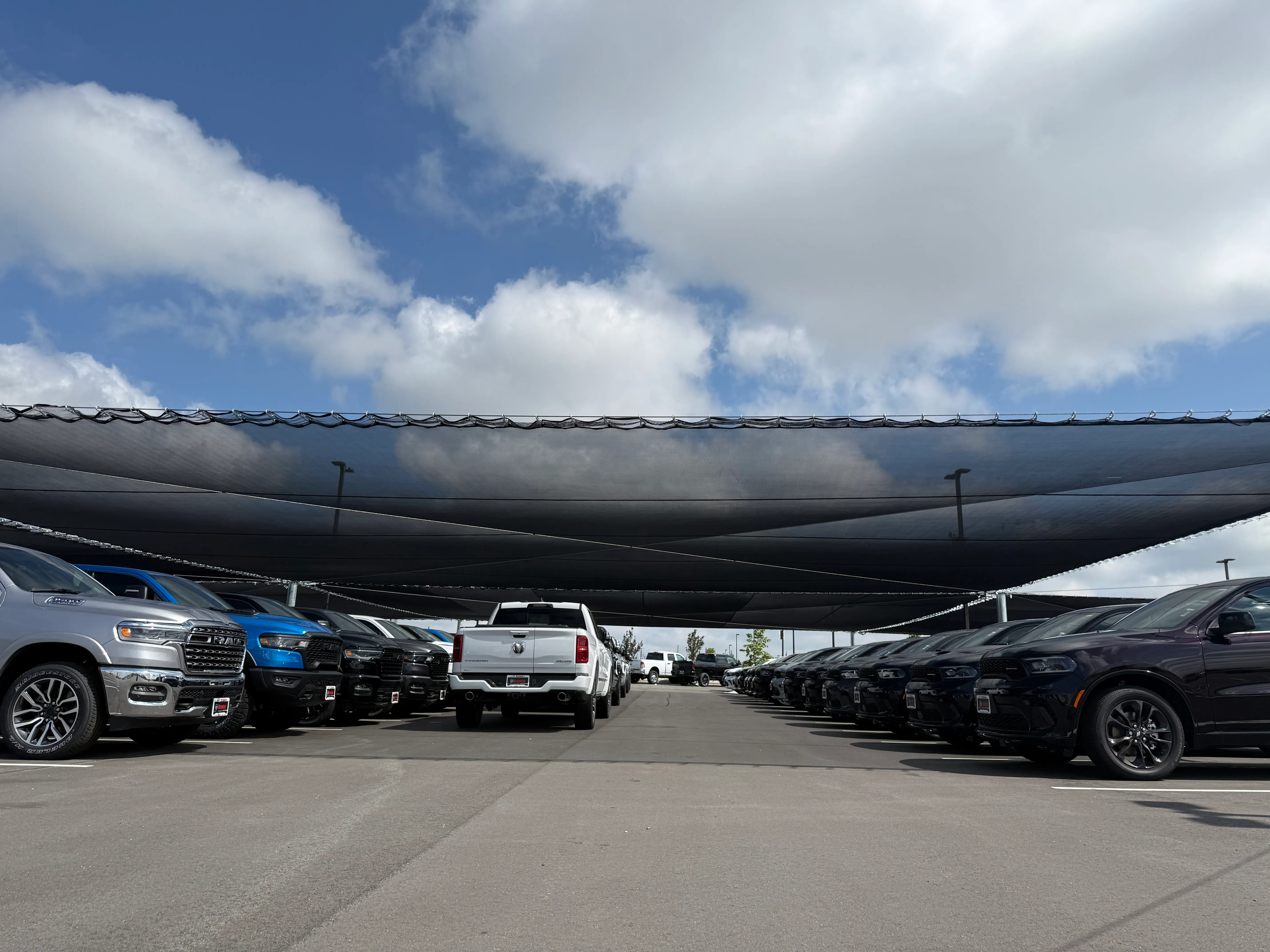
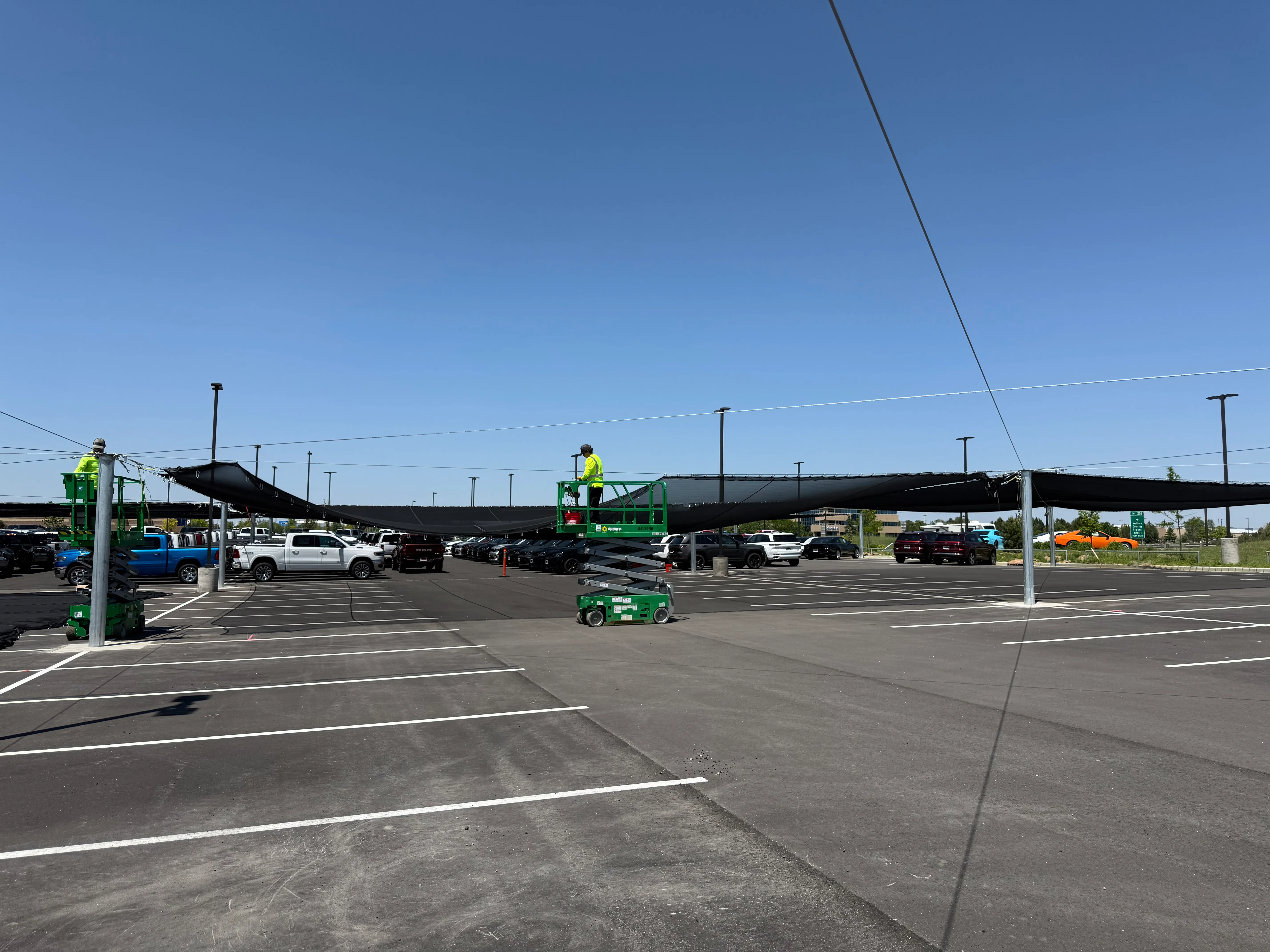
Commercial hail netting is an engineered tensile system — not a tarp, and not a temporary cover. It uses UV-stabilized, knotless HDPE mesh (Hail No's S800 netting) held taut by galvanized steel cables and support columns. When hail strikes the mesh, the netting flexes and dissipates the impact energy across its surface area rather than transferring the full force directly onto the vehicles, equipment, or pavement below.
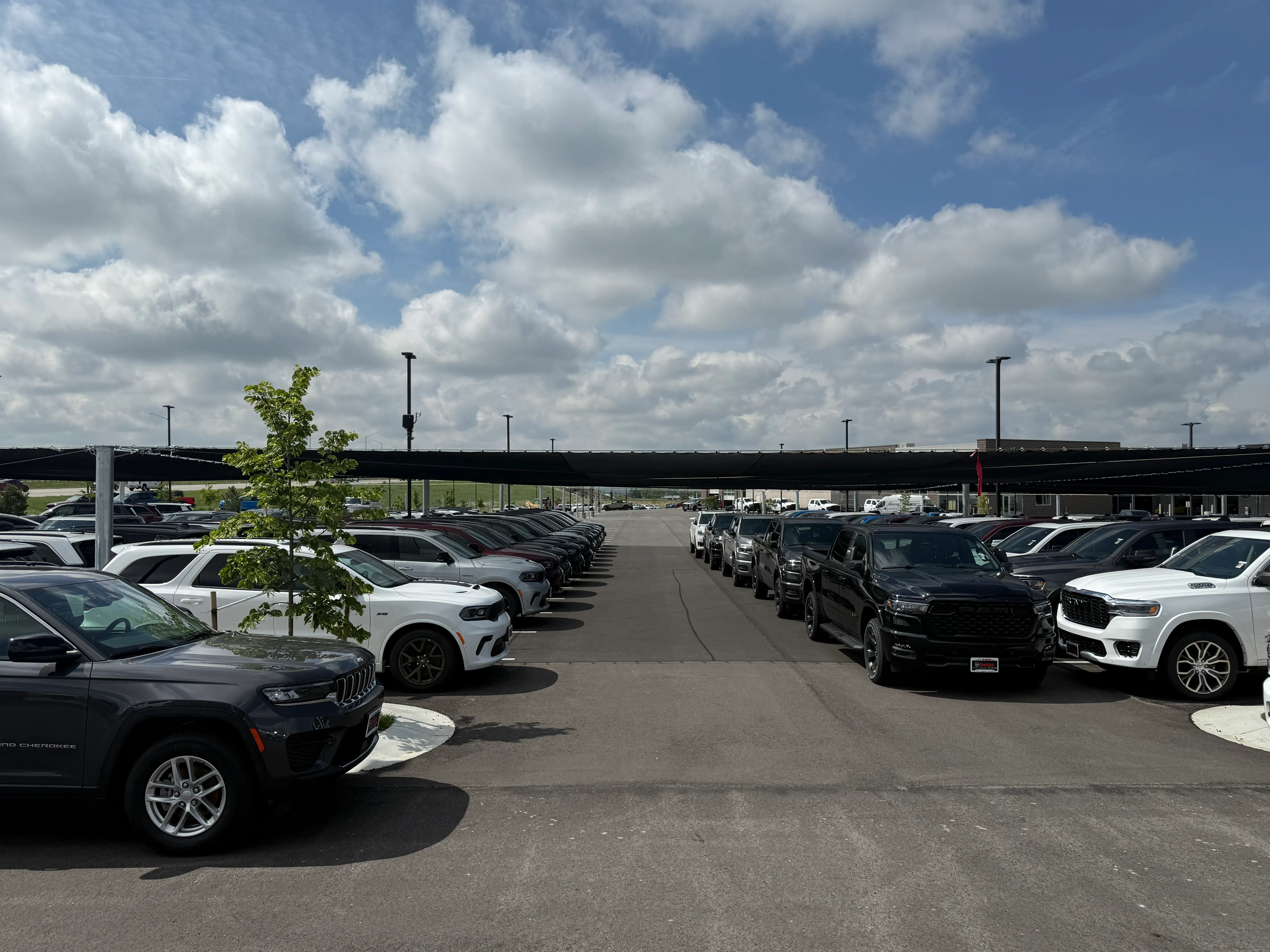
Because each system is engineered to the specific site rather than sold as an off-the-shelf product, it can be designed to hold up well past an average storm. Hail No's systems, for example, are built to withstand hail up to 2.0 inches in average depth, wind gusts up to 120 mph, and snow loads up to 30 pounds per square foot. At the same time, the open mesh structure keeps the space underneath fully functional day to day — light passes through, rainwater drains normally, and sightlines for security cameras or facility management aren't obstructed.
That combination — heavy-duty protection without changing how the space operates — is why commercial hail netting fits any outdoor site with high-value assets spread across a large footprint: dealership vehicle inventory lots, rental and delivery fleet yards, parking facilities, and industrial sites with outdoor equipment or material storage. Each installation is custom-engineered to the site's dimensions and local exposure data, so a five-acre dealership lot and a two-acre fleet yard end up with different layouts, not the same fixed structure.
Hail No Hail Netting Materials & Specs
- S800 Knotless Netting: HDPE mesh, tear-resistant, UV-protected
- Tension System: Galvanized/stainless cabling and fittings
- Anchoring: Column and foundation engineered to local codes
- Warranty: 5 year warranty. Source: Hail No warranty
See the full Hail No Spec Sheet
Hail Netting System Costs & ROI
- Hail netting installed cost is lower than rigid canopies or indoor storage options
- Ongoing maintenance is minimal (just an annual check)
- Insurance premiums often drop significantly after installation.
Learn More >> Can Hail Protection Lower Your Insurance Premiums?
Hail Netting Installation Process & Timeline
- Design Coordination: 3 - 4 weeks (must be completed prior to permitting)
- Permitting Process: 4 - 8 months (must be completed prior to resource procurement)
- Resource Procurement & Site Preparation: 4 - 8 weeks
- Foundation Work & Column Installation: 4 to 6 weeks
- Cable/Net Measurement & Fabrication: 5 to 8 weeks
- Final Installation: 2 weeks
- Final Inspection & Walkthrough: 1 week
- Project Handover: 1 day
Learn More >> What to Expect During a Hail Netting Installation Project: Step-by-Step Overview
How Does Hail Netting Compare to Other Hail Protection Options?
A Comparison Table: Hail Netting vs Hail Protection Alternatives
Why Auto Dealerships, Fleets, & Parking Lots Need Hail Protection
The case for hail protection looks a little different depending on which part of the business it touches, but the underlying risk is the same: hail damage rarely stays contained to a single bad storm.
For dealerships and rental fleets, the issue is concentrated asset value. A dealership lot can carry vehicle inventory worth millions of dollars sitting outdoors, and when a storm hits, the damage typically spreads across dozens or hundreds of vehicles at once rather than one at a time — which is exactly the kind of concentrated-loss event that pushes insurers to raise premiums sharply, sometimes after a single hail storm. In one documented case, a hailstorm sequence pushed one dealership group's monthly premium from $28,000 to $141,000 before netting was installed.
For parking operators — campus, office, retail, or airport lots — the calculation is less about asset value and more about revenue and liability. Operators managing high-traffic, high-visibility lots can often charge a premium for guaranteed covered parking, which turns hail protection from a pure cost center into a revenue generator that can support higher rates.
For fleet operators, industrial plants, and warehouses with outdoor storage or staging areas, the bigger risk is operational continuity. A fleet grounded for repairs after a storm, or an industrial yard where damaged material has to be sorted and replaced, isn't just an insurance claim — it's lost delivery days, missed contracts, and disrupted operations that never show up on a premium statement at all.
Buyer’s Checklist for Hail Netting
- Site plan with dimensions + traffic lanes: Hail No can create a custom proposal for your site
- Local design codes and wind/snow exposure
- Material specs and warranty terms
- Insurance broker engagement: Get in touch proactively to lower premiums
- Operational phase plan
- Maintenance plan: Hail No can also remove hail netting in the off season if desired
Hail Netting FAQs
What is the lifespan of Hail Netting?
Hail netting has multi-year durability under sun, wind, and Hail No's netting comes with a 5 year warranty.
What is the typical Insurance impact of installing a hail protection system?
Typically positive—fewer claims and lower hail insurance premiums, with savings up to 40%.
Can hail netting withstand extreme hail?
Hail No systems are engineered to worst-case local hail data and can withstand a severe hail load of 2.0” average depth.
Does hail netting interfere with lighting or cameras?
Hail netting’s mesh allows light to pass through and specific needs like cameras can be integrated into pre-layout plans.